Spirals of Support – Developmental Movement, Alexander Technique & the Art of Everyday Mastery
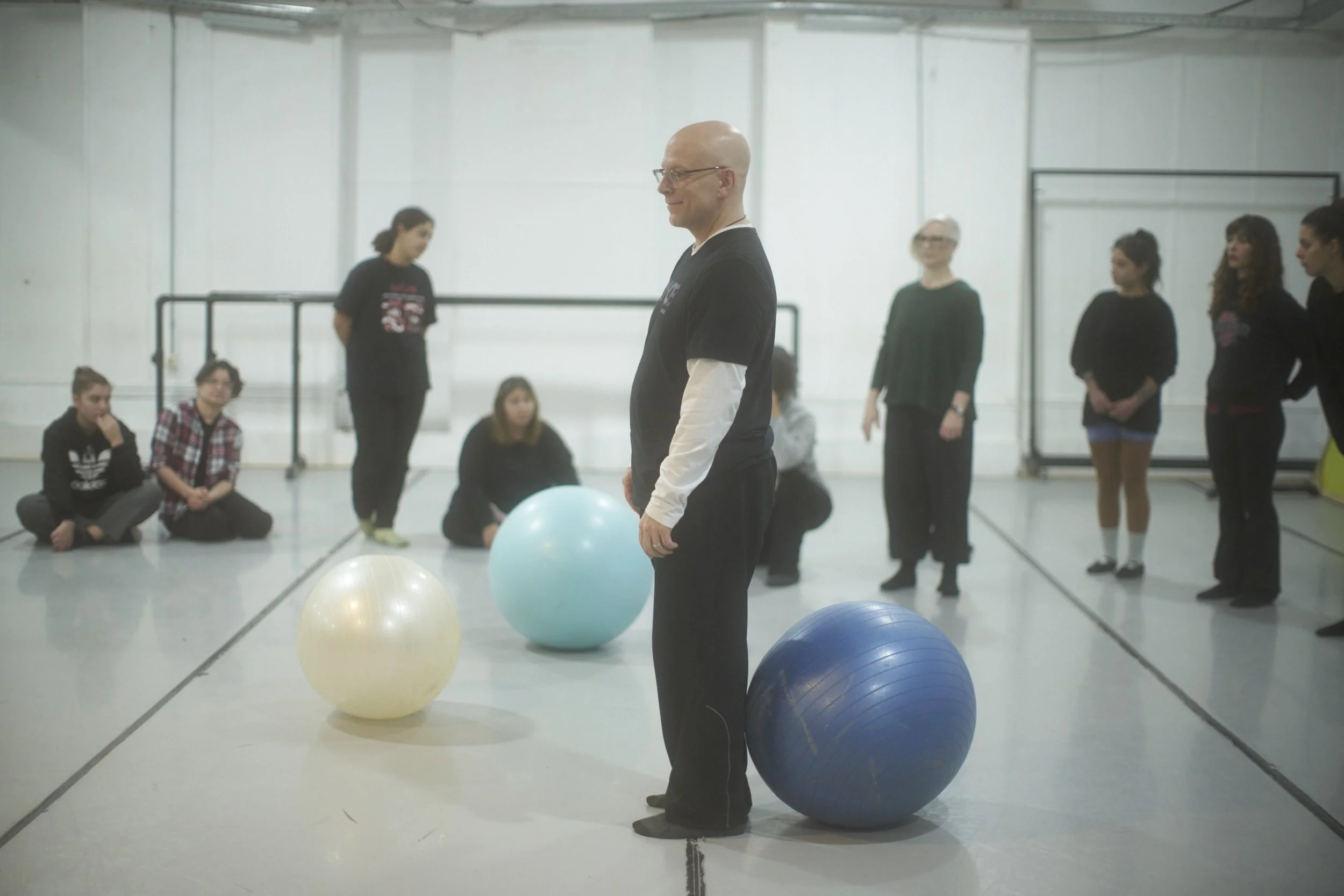
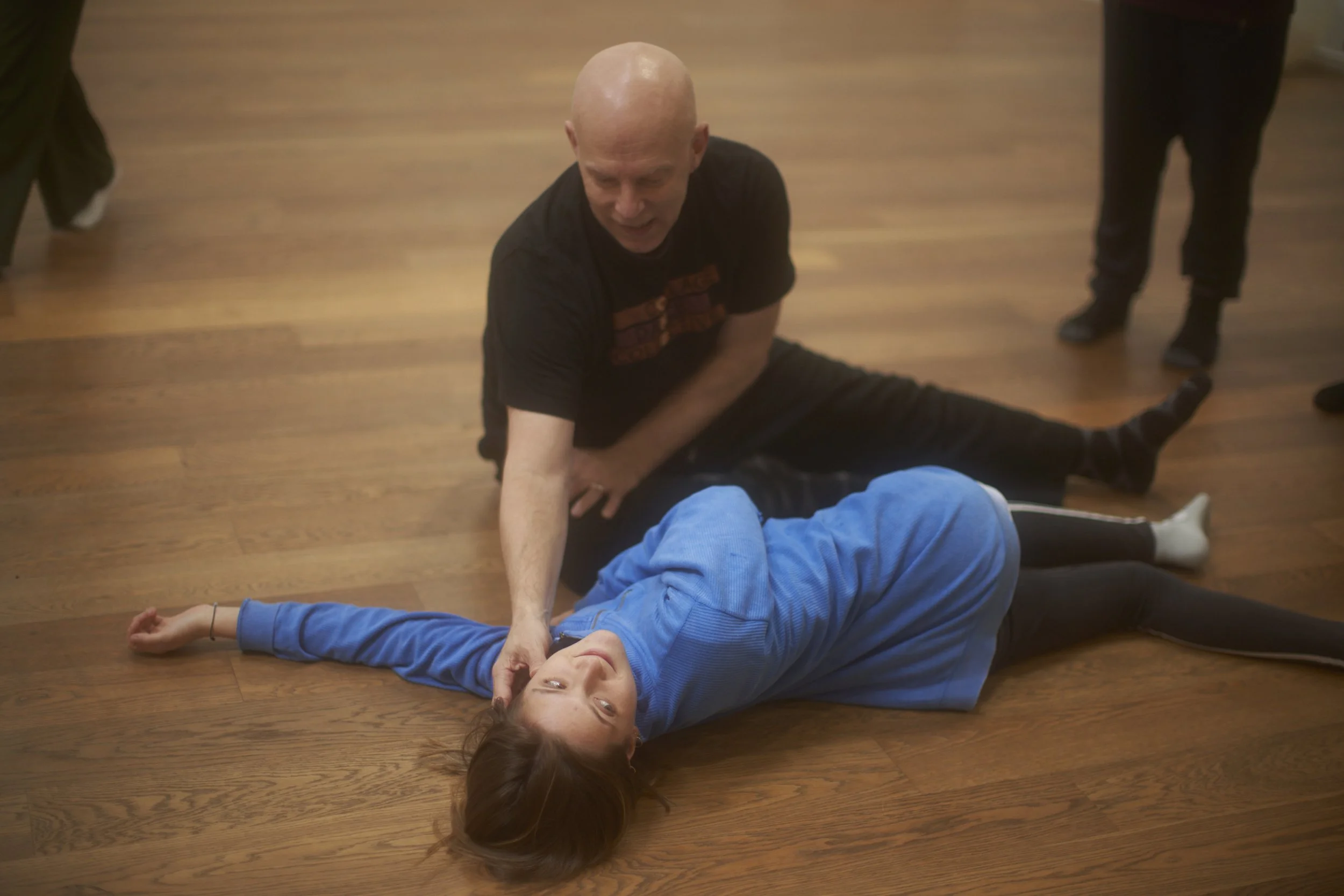
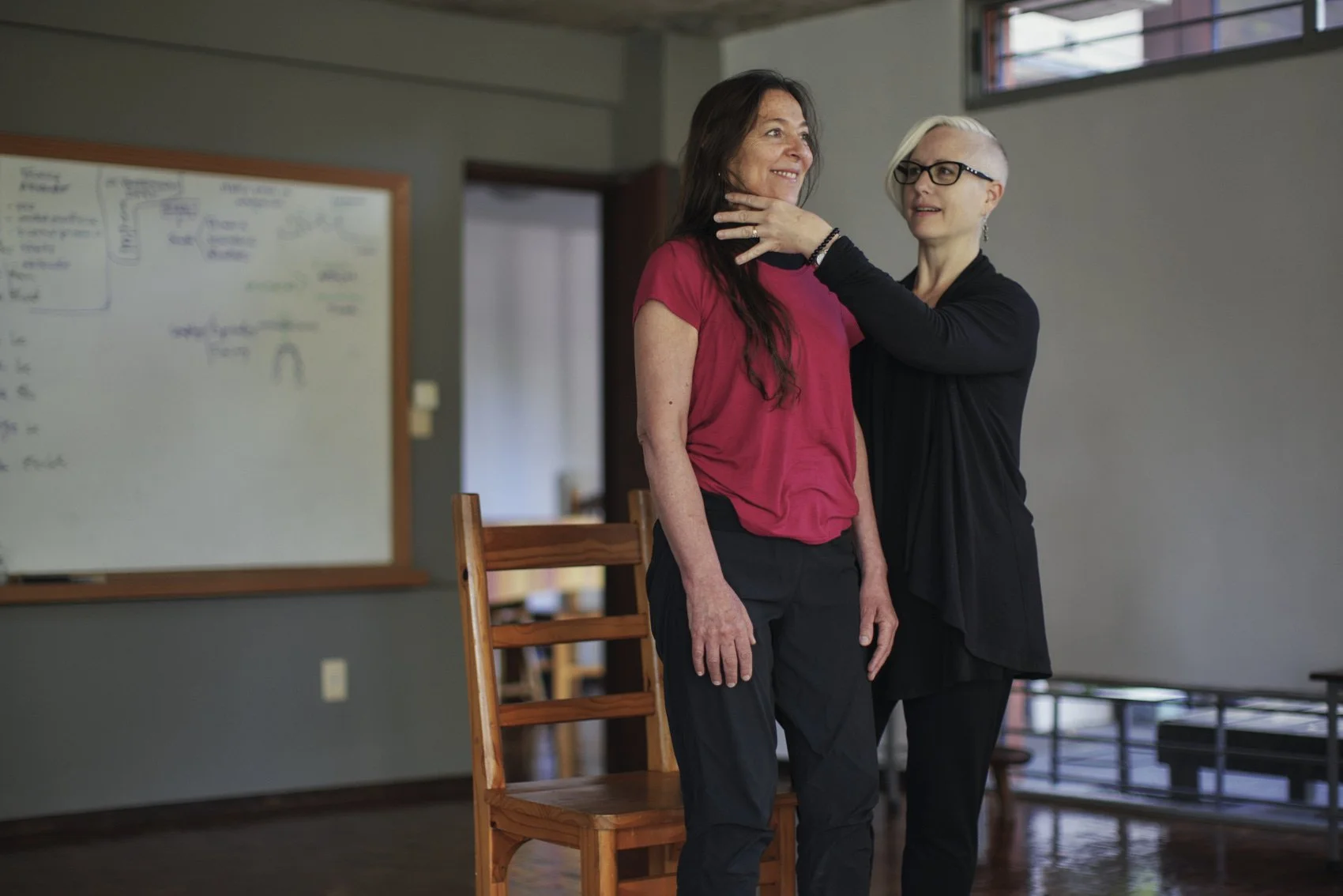
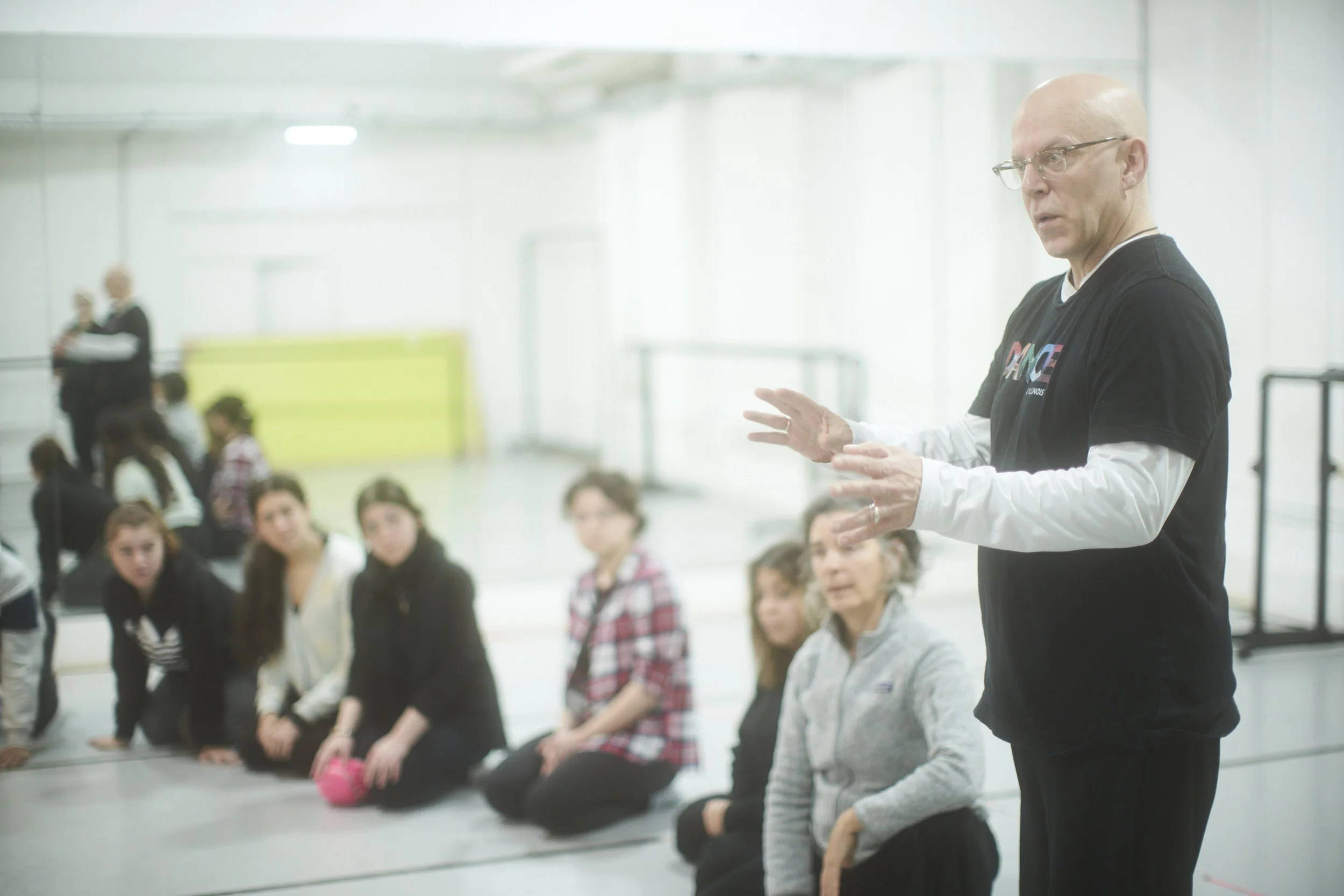
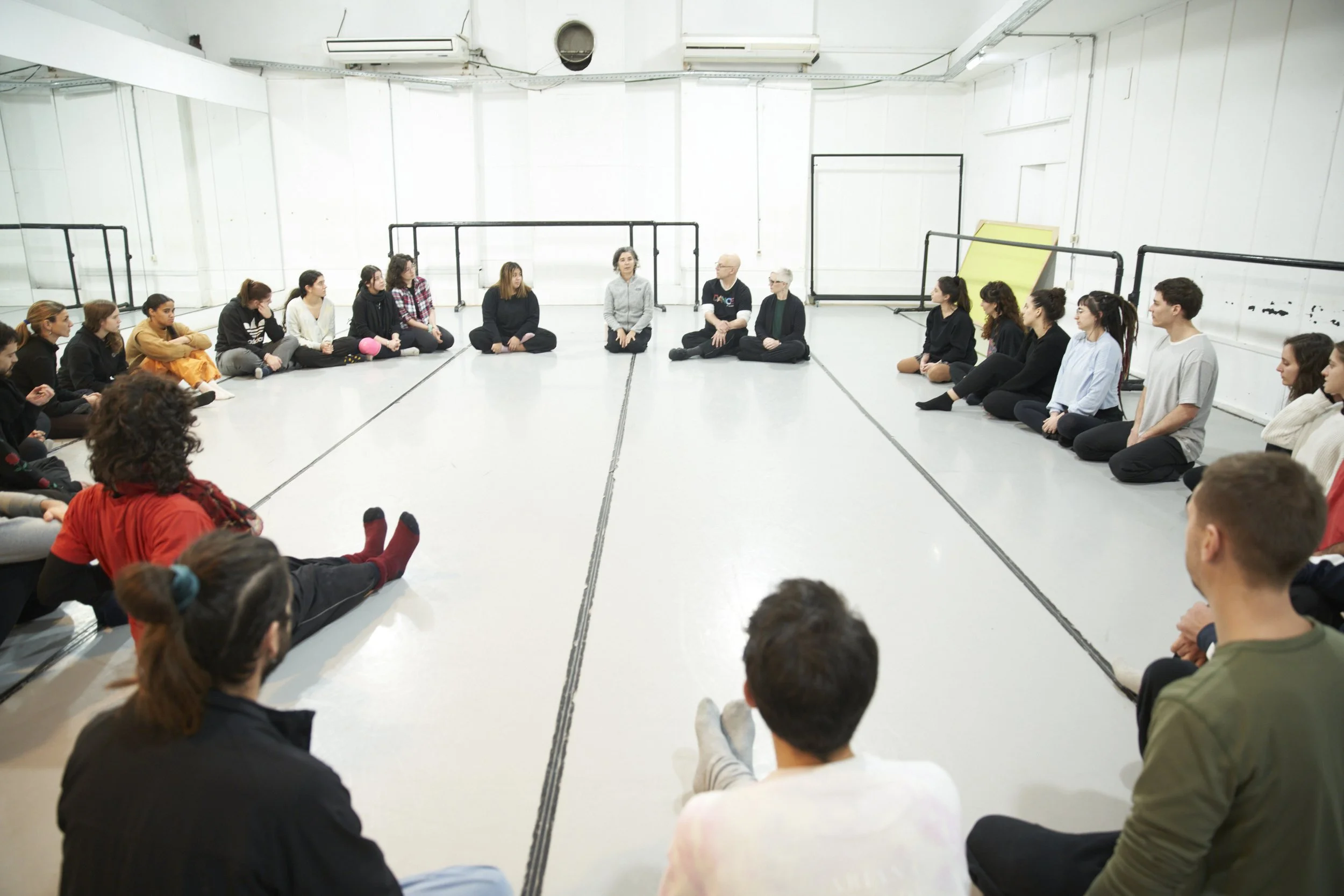
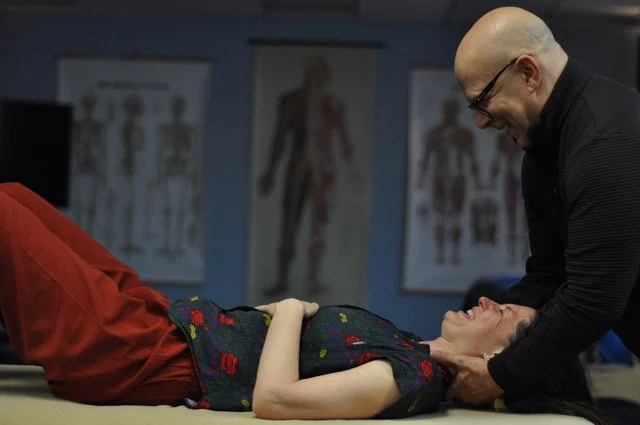
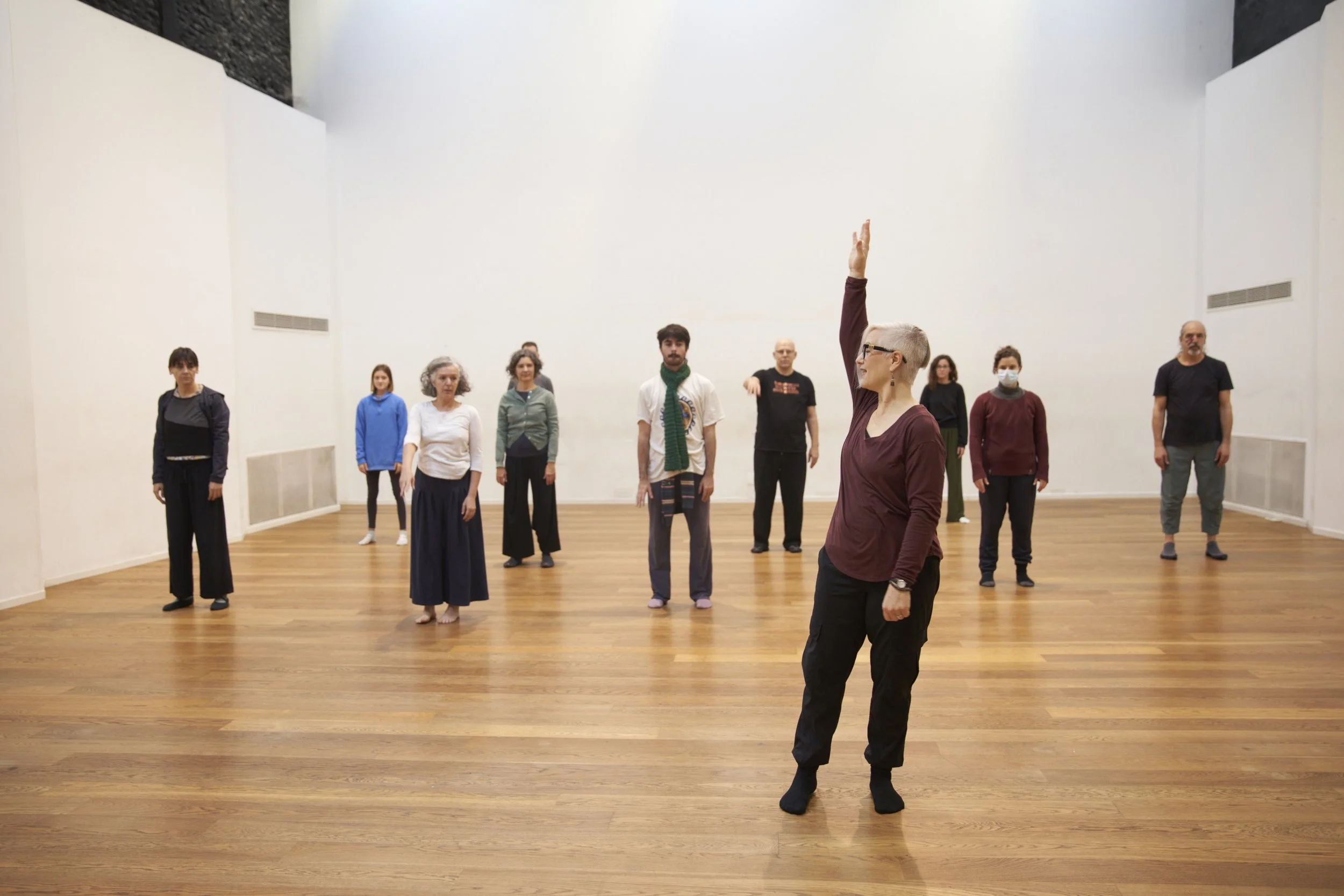
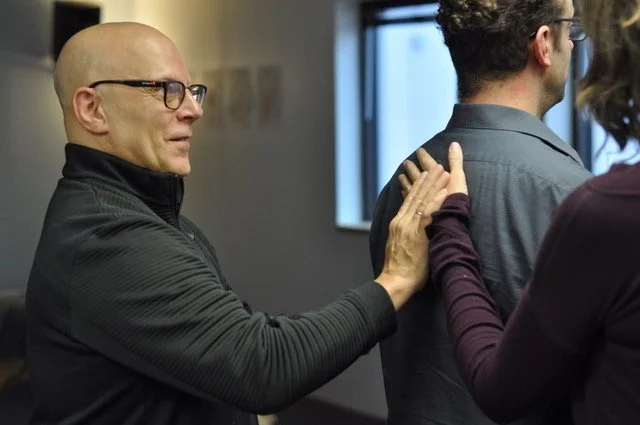
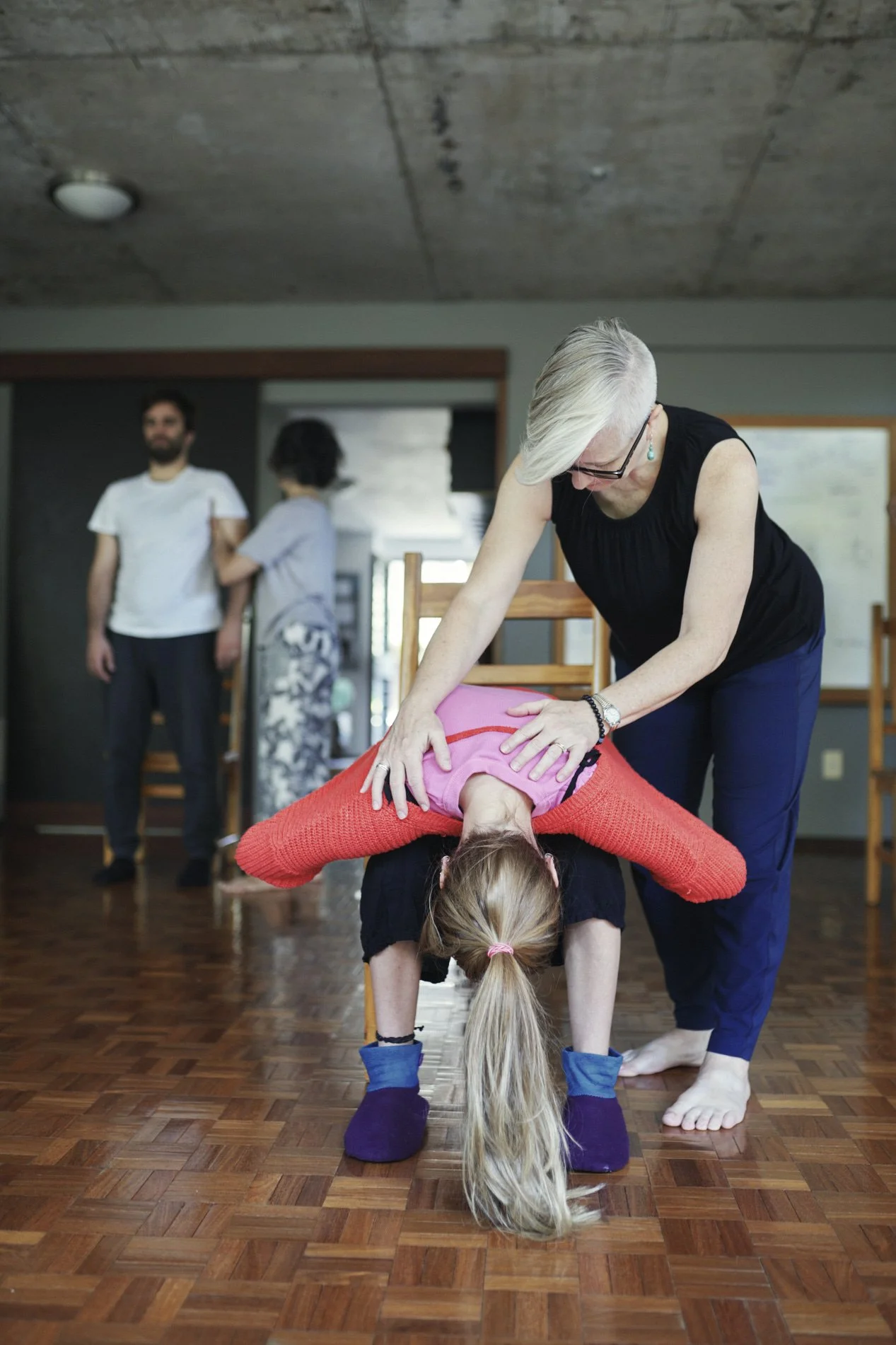
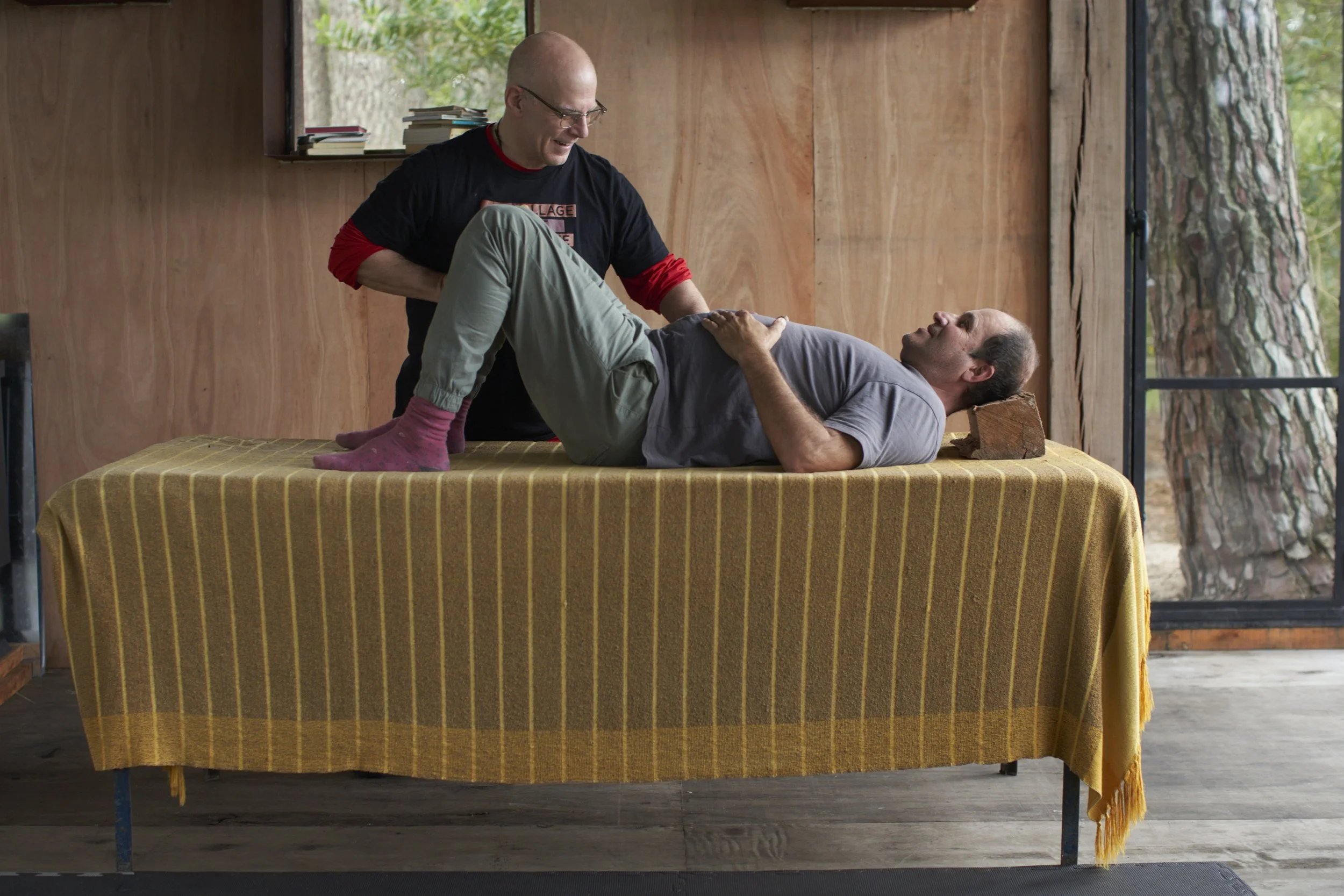
Luc Vanier and Elizabeth Johnson (USA)
A practical and experiential exploration for anyone interested in understanding the deeper organization of movement and human coordination.
Designed for Alexander Technique teachers and trainees as well as body-oriented therapists and professionals working with people, this workshop introduces the Framework for Integration (F4I℠) alongside the Dart Procedures as complementary developmental perspectives for hands-on work and everyday living.
The Framework for Integration (F4i) offers a clear and accessible way of perceiving how movement and posture organize themselves in the body. Through a small set of simple principles, participants begin to recognize patterns of support, effort, protection, and coordination that shape how we move, breathe, and relate to our environment. In this way, the work can illuminate some of the common misunderstandings about how the body (and our mind) functions that many of us — and often our clients — live with.
Rooted in developmental movement, somatic education, and the psychophysical principles of the Alexander Technique, the workshop invites participants to shift from correcting movement toward perceiving relationships: primary and secondary support, engagement and rest, spirals and counter-spirals.
Rather than striving for static “perfection,” we explore a form of mastery that is adaptable and alive — one that grows from awareness, curiosity, and responsive coordination.
Throughout the workshop, participants move fluidly between table work, embodied exploration, observation, reflection, and practical applications to everyday activities such as sitting, walking, reaching, and speaking.
Join us in Munich for two and a half days of exploration, dialogue, and embodied learning.
-
This workshop is for you if…
You are an Alexander Technique teacher or trainee seeking fresh pedagogical clarity.
You are a body-oriented therapist or somatic trauma therapist and want to deepen how you perceive support, protection patterns, and nervous-system regulation in your clients.
You wish to deepen your understanding of developmental movement patterns.
You are curious about how babies and animals organize movement — and how that wisdom informs mature skill.
You want to refine your hands-on work without becoming more corrective or forceful.
You value trauma-informed, prosocial learning environments.
You are interested in bridging somatics, pedagogy, and lived experience.
-
We will explore:
The Framework for Integration (F4I℠) as a practical observational language
Primary & secondary as principles as well as thinking directions
Engagement & reset
Spirals & counter-spirals in functional movement
The Dart Procedures through the lens they helped inspire
How resilience emerges from reflective non-grasping
How everyday activities (sitting, walking, speaking) become sites of refinement
The workshop emphasizes embodied inquiry, not performance outcomes.
-
Unlike systems that prescribe ideal forms, F4I℠ supports:
Noticing relationships rather than imposing shapes
Allowing refinement to emerge from approximation
Mastery as adaptability, not rigidity
Joy as a sign of integration
Awareness as the ground of skill
This work does not erase natural spirals — it restores them.
-
Participants often report:
Greater clarity in observing patterns
Increased subtlety and confidence in hands-on work and therapeutic guidance
A calmer, more regulated teaching or therapeutic presence
Language to articulate what they value in their work
A renewed sense of joy and curiosity in movement
-
Many therapists and practitioners working with the body encounter the same question: how can we better understand what we see in a person’s movement, posture, and patterns of effort?
The Framework for Integration (F4I℠) offers a simple and practical lens for perceiving how movement organizes itself in the body. Through a few clear principles, it becomes easier to recognize patterns of support, protection, tension, and adaptation that shape how people move and relate to their environment.
Many of us live with subtle misunderstandings about how our bodies function and coordinate. Our clients often arrive with these same patterns. F4I helps practitioners recognize these dynamics more clearly and accompany change with greater sensitivity.
Rather than correcting movement, the framework supports a deeper understanding of the relationships that organize both movement and inner regulation — offering valuable insights for therapeutic, educational, and somatic work.
Further information
-
Day 1 (evening)– Foundations: Developmental Movement & Use
Orientation & shared intentions
Introduction to F4I℠ (Primary, Secondary, Engagement, Spirals, Counterspirals, Double Spirals, ball work, upper lower cones, breathing, and timing)
Experiential movement explorations
Day 2 – Application & Pedagogy
Integrating Dart Procedures with F4I℠
Table work & partner explorations
Translating developmental principles into teaching language
Day 3 (½ day) – Integration & Everyday Life
Applying principles to daily activities
Teaching simulations & reflection
Closing circle & integration
-
Friday, June 19, 2026
18:00 – 21:00Saturday, June 20, 2026
09:00 – 12:00
14:00 – 18:00Sunday, June 21, 2026
09:00 – 13:00The workshop unfolds over two and a half days, allowing time for embodied exploration, hands-on work, reflection, and integration. Breaks are scheduled between sessions.
-
TANZTENDENZ München
Studio A
Lindwurmstraße 88
80337 Munich, GermanyNearest subway station:
Goetheplatz (U3, U6)TANZTENDENZ München is located in the center of Munich and can be easily reached by public transport. The studio offers a spacious and quiet environment suitable for movement exploration and hands-on work.
-
The workshop will be taught in English.
Questions and discussions can also be supported in German when needed. -
Sliding scale: €230 – €350
To make participation accessible to people in different financial situations, this workshop is offered on a self-assessed sliding scale. Please choose the amount that feels appropriate and sustainable for you.
€350 – Supporter rate
For participants with a stable or above-average income who regularly spend money on travel, leisure, and professional or personal development, and who are able to help support lower participation rates for others.€280–€320 – Standard rate
For participants with sufficient income to cover living expenses and occasional spending on travel, leisure, or professional development, and with some access to financial resources.€230 – Reduced rate
For participants with limited or unstable income, little access to savings or financial support, and/or who experience structural financial barriers.Please indicate your chosen contribution when registering.
An invoice will be issued accordingly.Places are allocated in the order registrations are received.
Your place is confirmed once the participation fee has been transferred.Cancellations are possible up to two days before the workshop, with a €25 administrative fee retained.
-
Please come in comfortable clothing that allows you to move and rest easily.
You may also wish to bring:
warm socks, as we will often work without shoes
a water bottle
and a notebook if you would like to jot down reflections or insights during the workshop.
Most importantly, bring your curiosity and willingness to explore.
Luc Vanier & Elizabeth Johnson (USA)
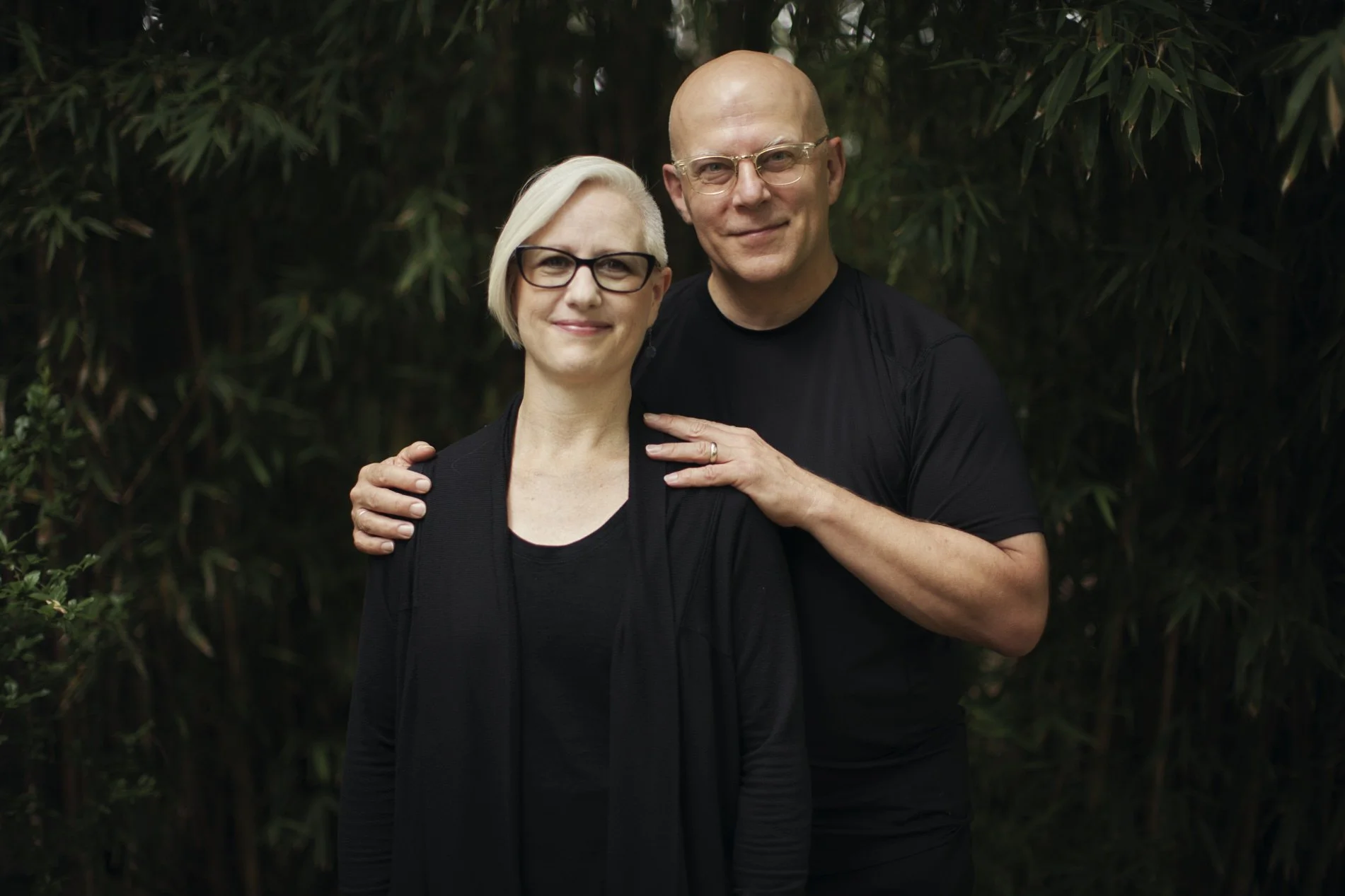
Luc Vanier
Luc Vanier (MFA, M.AmSAT, MSDE) is Professor of Dance at the University of Utah, where he teaches graduate and undergraduate courses in ballet, somatics, pedagogy, and interactive movement technologies. He is Training Course Director of Salt Lake CityAlexander Technique (SLCityAT) and founder of the Integral Movement Research Center. Vanier has lectured and presented internationally on the integration of somatic education, developmental movement, and pedagogy. He is co-author of Dance and the AlexanderTechnique (University of Illinois Press), also published in Spanish, and co-author of the forthcoming book The Dance of Everyday Movement: A Developmental Framework for Whole-Body Integration. He is co-creator of the Framework for Integration (F4i), a developmental movement analysis approach that supports teachers and movers in recognizing underlying patterns of coordination and support in both teaching and daily life.
Elizabeth Johnson
Elizabeth Johnson is Director of the Department of Dance at the University of Maryland, Baltimore County (UMBC). A choreographer, educator, and Alexander Technique practitioner, she has over two decades of experience in higher education and professional training. Johnson has taught and presented internationally in contexts that integrate somatic practice, developmental movement, and pedagogy. She is co-author of The Dance of Everyday Movement: A Developmental Framework for Whole-Body Integration and co-creator of the Framework for Integration (F4i). Her work emphasizes embodied learning, mentorship, and the cultivation of thoughtful, integrated movement in both artistic and educational settings.